
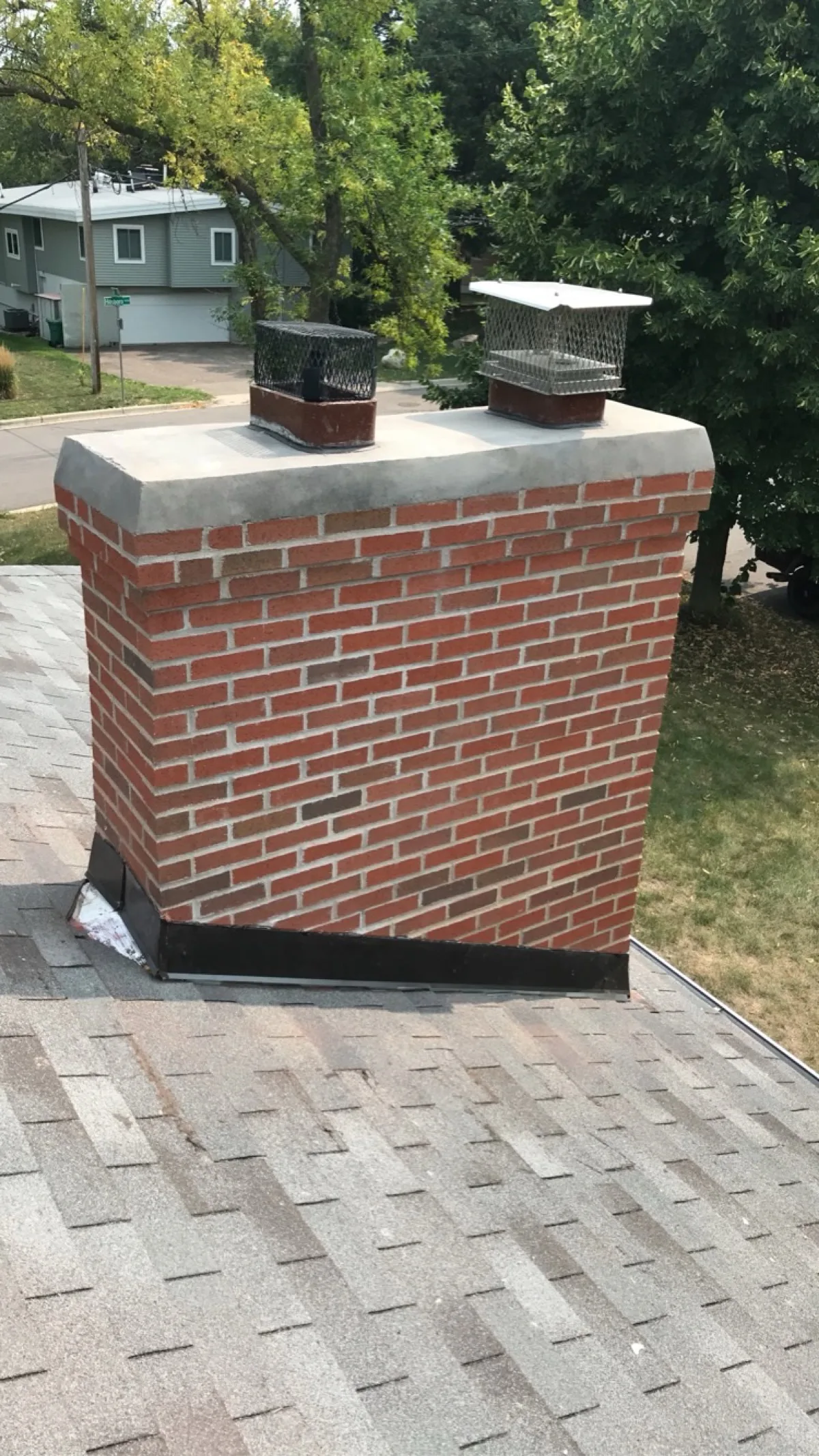
Chimney Rebuild vs Repair in Minnesota: Which Do You Actually Need?
Short answer: most chimneys that look rough still land in repair territory, and repair is a fraction of the price. Published cost data puts common repairs between $200 and $2,500 (caps, crowns, joint work), liners at $1,500 to $5,000, a partial rebuild from the roofline up at roughly $1,500 to $8,000, and a full rebuild at $10,000 to $25,000 or more. Full rebuilds are genuinely rare.
The difference between those numbers is why an honest assessment matters. Here is how the decision actually gets made on the roof.
What the Cost Data Says
| Scope | Published range |
|---|---|
| Stainless cap | $200 to $600 |
| Crown repair or recast | $300 to $1,500 |
| Chimney tuckpointing | $500 to $2,500 |
| Liner system installed | $1,500 to $5,000 |
| Partial rebuild (roofline up) | $1,500 to $8,000 |
| Full rebuild (entire structure) | $10,000 to $25,000+ |
Two notes on reading that table. First, partial rebuilds are often quoted per linear foot of height, commonly $100 to $300. A short rambler stack and a tall two-story chimney price very differently for the same work. Second, ranges from national guides overlap because every source draws the repair-vs-rebuild line slightly differently. The wall decides, not the guide.
Why Minnesota Chimneys Fail From the Top Down
A chimney is the most weather-exposed masonry on the house, and in this climate it takes 80 to 100 or more freeze-thaw cycles a year. The failure sequence is almost always the same:
- The crown cracks. Most older stacks have a thin mortar-wash crown that was always going to crack.
- Water enters through the crack and through any uncapped flue, soaking the top of the stack.
- Freeze-thaw pries joints open and pops brick faces off, working downward season by season.
That is why the top few feet of a chimney can be junk while the bottom is sound, and why the crown and caps are the highest-value dollars you can spend on one. Our chimney repair page covers the crown, cap and liner work in detail.
When Repair Is the Right Call
Repair handles it when the structure is still sound:
- The crown is cracked but the courses under it are tight
- Flues are uncapped or caps have rusted out
- Mortar joints are weathered on the exposed faces
- A handful of bricks are spalled or cracked
- The flue needs a stainless liner to vent safely
Those scopes run from a few hundred dollars into the low thousands, and done together in one mobilization they reset a chimney for decades. This is most of the chimney work we do across the Twin Cities.
When a Rebuild Is the Honest Answer
A rebuild is the right call when the masonry itself has failed:
- Courses are loose enough to move by hand, or bricks are missing
- Spalled faces are spread across the stack, not clustered at the top
- The chimney has a visible lean
- Previous patch repairs have failed repeatedly because the base problem was never fixed
In those cases we tear down to sound masonry and rebuild plumb, with matched brick, a cast concrete crown with a drip edge, and stainless caps. Almost always that means a partial rebuild from the roofline up. Industry data backs what we see in the field: full ground-up rebuilds are reserved for severe structural or foundation-level failure and are uncommon.
The Trap to Avoid: Paying for Repair Twice
The expensive mistake is patching a chimney that has crossed the line. New mortar smeared over loose courses, or a crown sealed on top of failing brick, buys one or two seasons and then the rebuild happens anyway, now with the repair money gone. The reverse mistake also exists: getting sold a full rebuild when a crown, caps and a day of joint work would have solved it.
The defense against both is the same. Get the recommendation in writing, with the reasoning: where sound masonry starts, what the crown looks like, which bricks are gone, photos included. That is how we quote every chimney, and if yours only needs the small fix, that is what the estimate will say. Send photos or call and we will give you the first read for free.