
Home Our Work About Blog FAQs Contact Call (320) 465-1161
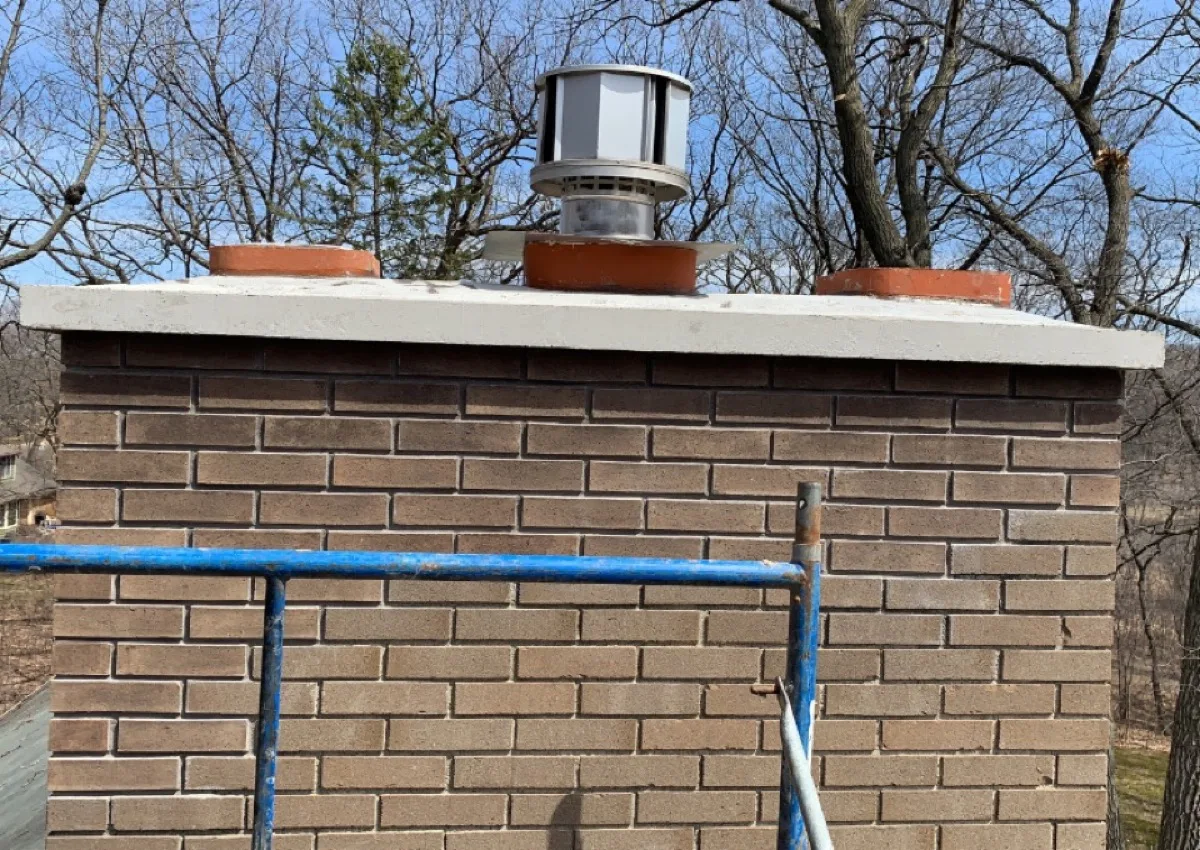
St. Paul has the oldest chimneys in the metro. Summit Hill and Ramsey Hill went up between the 1860s and the 1920s, and most of the houses there still carry their original brick stacks. Highland Park and Macalester-Groveland followed in the 1920s through the 1950s. The East Side, from Dayton's Bluff to Payne-Phalen, holds block after block of pre-1950 housing. A century of Minnesota winters shows on all of it in the same places: crowns cracked through, caps missing, joints washed out on the weather face, and top courses starting to rock.
We repair chimneys across St. Paul with the standard chimney repair lineup: poured crowns, stainless caps, repointing in matched mortar, flashing and firebox-side fixes. On stacks this old, the mortar match matters as much as the repair. Hard modern mortar on soft 1890s brick spalls the faces within a few winters, so we match hardness and color to the original. When the top courses are already loose, a partial rebuild above the roofline is the fix that lasts, and that work lives on our chimney rebuilds page.
Tell us about your project and we’ll get right back to you.
Age is the first reason. A chimney laid in 1905 has been through 120 Minnesota winters, and Minnesota runs 80 to 100 freeze-thaw cycles a year. Every cycle pushes water that got into a joint, freezes it, and pries the mortar a little further apart. Lime mortar was built to be the sacrificial part of the wall, and after a century it has given all it has. The brick is usually still good. The joints, the crown and the cap are what need replacing.
Height is the second reason. The two-and-a-half-story houses on Summit Avenue, Portland Avenue and the Crocus Hill streets carry tall stacks that catch wind and weather from every side. Tall chimneys take more scaffold to reach and more force from the weather, so they wear faster at the top. We set up for the height, photograph the crown and the top courses, and price the repair from what the roof shows, not from the street.
Repointing handles joints that have gone soft or open. New crowns and caps stop the water that causes almost everything else. Individual spalled brick gets cut out and matched. A chimney that still vents a furnace, water heater or fireplace may also need a liner, and many St. Paul chimneys built before the 1920s never had one. Our chimney repair and liner work covers the stainless relining that makes an old flue safe again.
Once whole courses rock loose or the stack leans, repair stops making sense and a rebuild above the roofline is the answer. St. Paul also has a commercial side to this work. Boiler stacks and parapet chimneys on the apartment blocks along Grand Avenue and the older buildings of Lowertown carry the same failure points at larger scale. That work runs through our commercial masonry restoration process: assessment first, then a prioritized scope, then the repair.
More about the service itself is on our Chimney Repair page, and everything we do around town is on the St. Paul service-area page.
Answers specific to chimney repair work around St. Paul. Something else on your mind? Call us.
A wall that worries you, a driveway past its best, or a backyard ready to become the good part of the house? Call or send the form and we will look at the site with you and hand you a straight written quote.
Tell us about your project and we’ll get right back to you.