
White Stains on Brick: What Efflorescence Is and How to Remove It
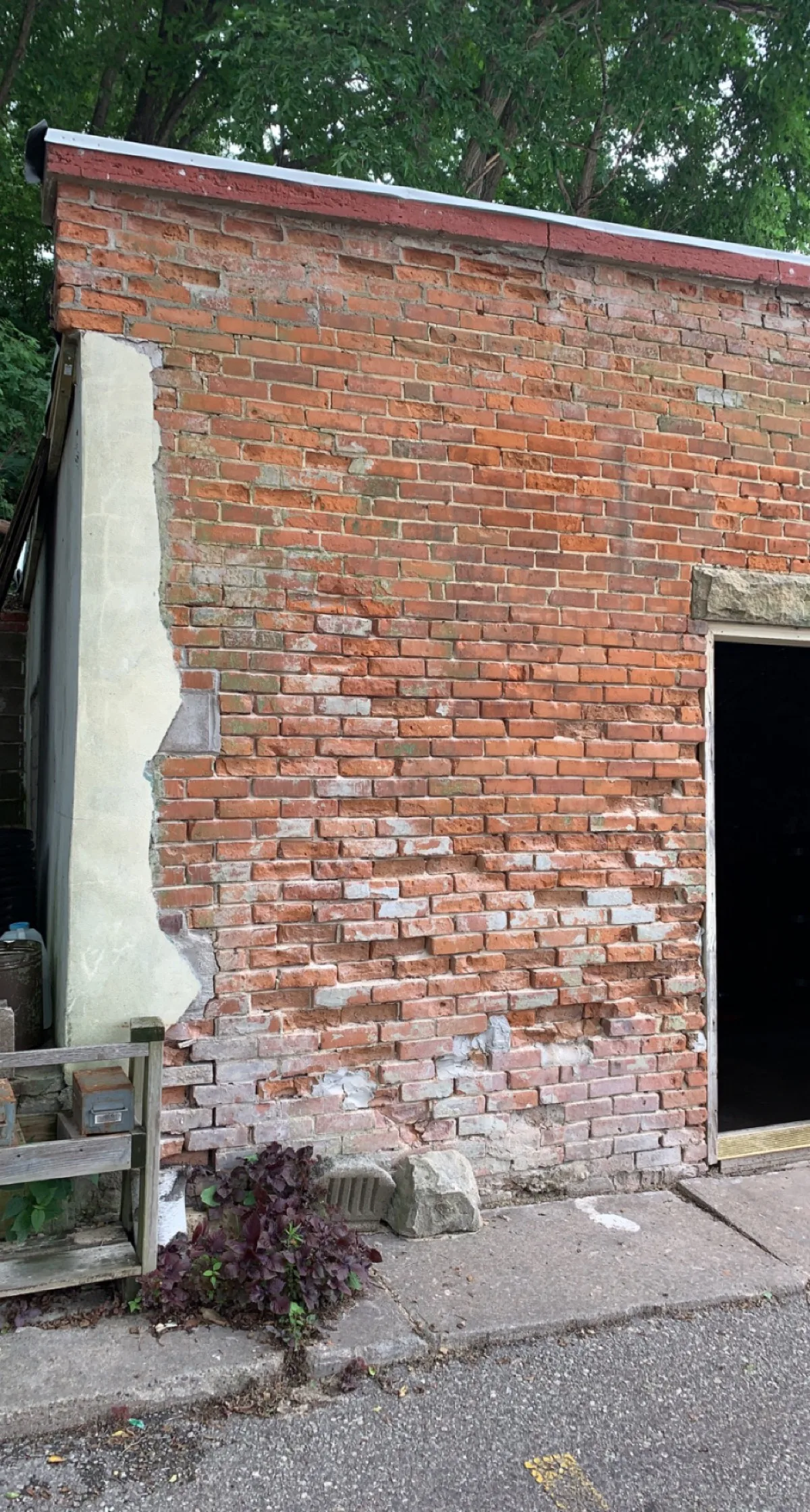
The white, powdery deposit on your brick is efflorescence: mineral salts that water carried through the wall and left behind when it evaporated. On its own it is usually harmless. As a message, it matters, because it is proof that water is moving through your masonry.
Here is what causes it, how to remove it without making it worse, and the specific situations where white stains mean it is time to call a mason. Fixing the underlying masonry is our brick repair trade.
What efflorescence actually is
Brick industry technical guidance describes three conditions that all have to be present. There must be soluble salts somewhere in the wall system, in the mortar, the brick, the backing, or the soil touching it. There must be water in contact with those salts long enough to dissolve them. And there must be a path that lets the solution migrate to the surface, where the water evaporates and drops its mineral load.
Remove any one of the three and efflorescence cannot form. That is the whole logic of both the cleanup and the permanent fix.
New buildings often bloom white in their first year as construction moisture works its way out. That version weathers away on its own and is nothing to act on. The version that shows up on a 60-year-old wall every spring is a different story.
How to remove it without feeding it
The order of operations matters, because the obvious move, hosing the wall down, adds the one ingredient the process needs more of.
Start dry. A stiff brush, non-metallic, takes off most fresh efflorescence, and many deposits disappear with normal weathering anyway. If dry brushing is not enough, wash and scrub, but only in warm, dry weather, so the wall dries out fast instead of pulling more salts to the surface.
Deposits that have sat for years are harder. Airborne carbon dioxide slowly converts some salts into carbonate crusts that water will not dissolve. Those need a masonry cleaning product, tested on a small, hidden patch first, and rinsed thoroughly. Aggressive acid washing on old brick is a job for someone who has done it before; it can etch faces and burn stains into the wall.
One more caution from the industry guidance: do not reach for a clear sealer to make the problem invisible. Sealing a wall that still takes on water traps salt crystallization just below the surface. That pressure is what pops brick faces off, trading a cosmetic issue for a structural one.
When white stains mean call a mason
A one-time bloom after a wet spring is cosmetic. Patterns are diagnostic:
- The stains return every year in the same area. Water has a standing route into that section of wall, usually open mortar joints. Closing them is tuckpointing work.
- Staining concentrated below the chimney. A failed crown or cap is feeding water down through the stack. That is a chimney repair call before it becomes a rebuild.
- A white band along the bottom of the wall. Ground moisture is wicking up from the soil, and technical notes put its reach at a foot or two above grade. Grading and drainage are part of that fix.
- Flaking faces near the stains. The salts are now working below the surface. That is spalling, actual brick damage, and worth a professional look soon. Our post on spalling brick covers it.
The permanent fix is boring: close the water path
Every lasting efflorescence fix is a water fix. Repoint the open joints. Repair the crown and flashing. Correct the grade that holds snowmelt against the wall. Once the wall stops taking on water, the salts stay put and the staining stops restocking itself.
If a wall in the Twin Cities keeps growing white deposits no matter how often it gets cleaned, send us a photo through the contact page or text (320) 465-1161. We will tell you where the water is getting in and what closing that path takes.