
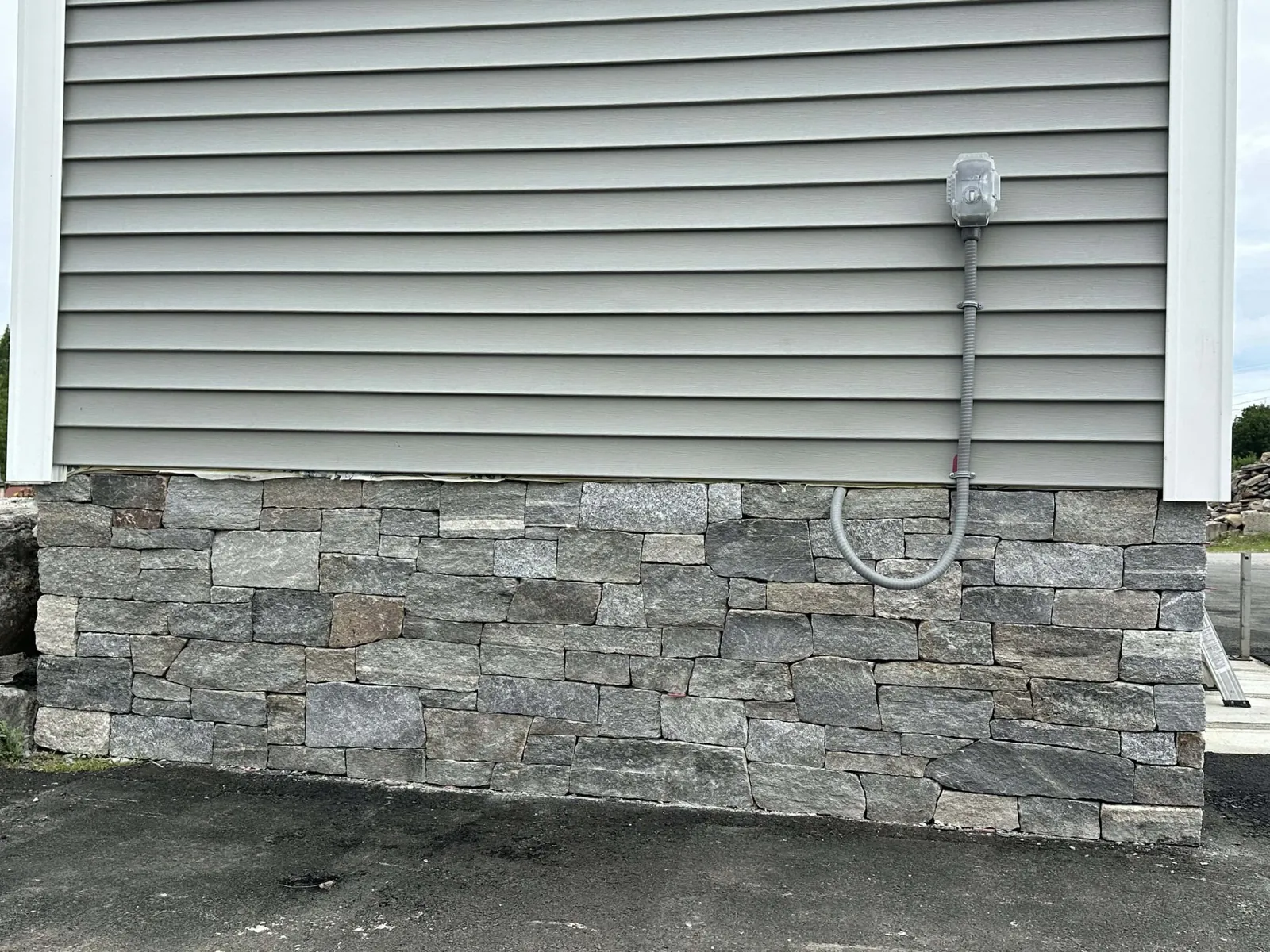
How Much Does Stone Veneer Cost in Minnesota?
Thin stone veneer costs $20 to $50 per square foot installed in a stone supplier’s 2026 price guide. The range depends on whether the stone is natural or manufactured. An installation cost guide updated in 2025 splits it by type. It puts manufactured stone at $10 to $35 per square foot installed and natural thin stone at $15 to $45.
A 2026 cost guide with city prices puts Minneapolis stone siding at $28 to $50 per square foot. Each range below keeps its own source and year. Use them to plan a budget before our stone veneer installation and stone repair crew sees the wall.
What does stone veneer cost per square foot?
Published guides price stone veneer in different ways, so each range gets its own row. All five are installed prices per square foot.
| Stone veneer type | Installed price per sq ft | Where the range was published |
|---|---|---|
| Thin stone veneer, natural or manufactured | $20 to $50 | a stone supplier’s 2026 price guide |
| Stone veneer siding | $13 to $22 | a 2026 home improvement cost guide |
| Stone siding in Minneapolis | $28 to $50 | a 2026 cost guide with city prices |
| Manufactured (cast) stone veneer | $10 to $35 | an installation cost guide updated in 2025 |
| Natural thin stone veneer | $15 to $45 | the same 2025 installation guide |
The 2026 home improvement guide puts a 1,000 square foot job at $13,000 to $22,000. The city price guide says high demand has pushed stone siding prices up 5 to 10 percent in recent years. It says urban areas cost slightly more than suburban or remote ones.
Is natural stone veneer more expensive than manufactured stone?
Yes, in the published numbers. Manufactured stone veneer, often called cultured stone, is molded concrete colored to look like natural rock. The stone supplier’s 2026 guide puts it at $8 to $15 per square foot for material alone. Natural thin stone runs $16 to $30, because it is quarried, cut and finished by hand.
Labor comes on top of the stone. The same guide puts installation labor at $8 to $20 per square foot. By the hour, it lists about $40 to $85 for a skilled mason. It calls labor the largest single line item when you hire a pro.
The supplier’s guide says thin veneer is usually about 1 to 2 inches thick. The Concrete Masonry and Hardscapes Association cites the ASTM C1670 standard for manufactured units. Those units average no more than 2.625 inches thick. Because thin veneer is light, it needs no separate footing.
What does full bed natural stone cost?
Full bed stone costs more than thin veneer, and the supplier’s 2026 guide explains why. Thin veneer uses less material, weighs less and skips the footing, so it costs noticeably less. A 2026 home improvement guide compares full bed work to building a stone wall, one block on top of another.
None of the guides above prints a square foot price for full bed stone alone. The closest figure is real stone on a whole house. The city price guide puts real stone siding on a 2,500 square foot house at $87,500 to $125,000. It calls natural stone the most expensive and labor-intensive type of stone siding.
Weight and pace explain the gap. The city guide warns that not every house can carry natural stone. In the 2026 home improvement guide, a mason puts regular brick or stone at over 60 pounds a square foot. The veneer he compares it with weighs 15.
Natural stone also goes up slowly. The same guide says a mason and a helper lay only 15 to 20 square feet of fieldstone a day.
What does a stone fireplace surround or chimney cost?
For fireplace and accent walls, the stone supplier’s 2026 guide calls a single interior wall the most popular starting point. An installation cost guide updated in 2025 puts stone veneer over a fireplace at $1,300 to $5,000. It says the height and stone type set the price.
Outside, the same 2025 guide puts stone veneer on a chimney at $1,000 to $6,000. Size and roof access decide where a chimney lands in that range. We set stone veneer on fireplace surrounds and on chimney chases. Either way, the price starts with what sits behind the stone.
What does wall prep add to a stone veneer job?
Wall prep is the part of the price you cannot see once the stone is up. On an outside wall, the code calls for a water-resistive barrier behind adhered veneer. The installation practice for manufactured stone, ASTM C1780, lists lath, lath fasteners, weep screeds and flashing among its materials. The supplier’s guide adds that walls needing cement board or a scratch coat cost more.
Old siding usually has to come off or be reinforced first. The 2025 installation guide puts siding removal at $1 to $6 per square foot, depending on the material. Two 2026 guides put removal at $3 to $4 per square foot when the old siding has lath or anchors.
Two 2026 guides put a moisture barrier at $2 to $4 per square foot. One of them puts new plywood sheathing at another $2 to $4. When the underlayment has to be redone, both put the full job at $9,900 to $17,900.
The bottom edge has its own detail. The residential code calls for a corrosion-resistant screed or flashing at the base of a framed wall. It runs at least 1 inch below the foundation plate line.
What else moves the price of stone veneer?
Corners and cuts. The stone supplier’s guide says corners cost more because each piece is cut to wrap two faces at once. Each cut around a window adds time.
Height and staging. In the 2026 home improvement guide, a two-story house takes more work than a 36-inch strip at the base. The supplier’s guide says tall walls need staging and more hours. The 2025 installation guide adds 25 to 35 percent to labor for complex and multi-level layouts.
Our crews work from lifts and scaffolds on commercial and church jobs. Staging for a tall house wall is listed in the written scope.
What does stone veneer repair cost?
Failed veneer shows up as loose or cracked stones, open joints and water getting in behind the stone. A repair cost guide updated in 2025 puts an average repair at $20 to $60 per square foot. That covers replacing chipped, cracked or buckling stone. Simple mortar repair runs $7 to $13 per square foot.
Flashing repair costs more, because the stone over the flashing comes off first. The same repair guide puts it at $22 to $62 per square foot. It costs less when the old stones can be reused. Stone replacement on a second or third floor runs $60 to $100 per square foot.
Open joints on a full stone wall call for repointing, covered on our tuckpointing and repointing page.
How do Minnesota winters and codes affect stone veneer?
Minnesota runs 80 to 100 freeze and thaw cycles a year, so drainage behind veneer matters here. The 2025 installation guide lists freeze and thaw cracking as a downside of manufactured stone without installed drainage. It lists the same for natural stone without weep holes.
The code also sets where adhered veneer stops. Section R703.12.1 keeps it at least 4 inches above the earth and 2 inches above paved areas on stud walls. For anchored stone over a wood or steel frame, Section R703.8 sets a 5 inch limit on thickness. It also limits that veneer to the first story above grade.
Minnesota Rules 1309.0703 amend parts of section R703, such as the water-resistive barrier. They leave R703.8 and R703.12 unchanged. Ask your city’s building department what a permit needs before the work is scoped.
When does a stone veneer job need more than the stone?
A square foot price assumes a sound wall behind the stone. Wet sheathing behind failed veneer changes that. The old stone, lath and barrier come off so the wall can be repaired. New veneer then starts from a dry backing, and that tear-off is priced on its own.
Full bed stone needs a ledge or a footing to sit on. Where the wall has neither, building that support is part of the job, or the plan moves to thin veneer.
Stone that holds back soil is a different build with different loads. That work belongs with our retaining walls in block and stone. Flagstone paths and stone slab steps sit with our walkways and stone steps work.
A published range is a planning number. The price for your wall comes from a site visit, with photos of what we find. We put the scope in writing, stone and prep included, before any work starts.